If you’ve ever watched your child spend three straight days obsessed with pumpkins, dinosaurs, or axolotls, you already understand unit studies. You just haven’t named it yet.
A unit study is the most natural way young kids learn. Happily, it’s also one of the easiest ways for a tired parent to teach. This is the beginner’s guide I wish someone had handed me before my first one: what a unit study actually is, why it works so well for ages 4–9, a real week mapped out start to finish, and the one mistake that trips up almost everyone.
What a unit study actually is
A unit study takes one topic your child cares about and lets every subject grow out of it. Pumpkins become science (how do seeds work?), math (how many seeds in this one?), reading (pumpkin vocabulary), art (paint one!), and conversation (who could we share our pumpkin bread with?).
Instead of five separate subjects fighting for attention, you get one big adventure with five doors in.
Compare that to the traditional way: a math worksheet that has nothing to do with the spelling list, which has nothing to do with the science page, which has nothing to do with whatever your kid is actually thinking about. A unit study quietly ties the knot for you. The topic is the thread, and reading, writing, counting, and wondering all hang from it.
It’s worth saying what a unit study is not: it isn’t a full curriculum, it isn’t a test-prep program, and it definitely isn’t something you have to build perfectly. It’s a theme and a small pile of good activities. That’s the whole machine.
Why they work so well for ages 4–9
Young kids don’t naturally separate “school subjects.” They separate interesting from boring. A unit study keeps everything attached to something they already find interesting, so the learning rides in on curiosity instead of willpower.
There’s some real brain science under this, but you can feel it without the jargon: when a child cares about the topic, they pay attention longer, remember more, and ask better questions. A reluctant reader will happily sound out “a-xo-lotl” and “regeneration” because they want to know. Motivation does the heavy lifting that nagging never could.
They’re also forgiving for parents. Miss a day? The topic is still there tomorrow. Have a 5-year-old and an 8-year-old? They can explore the same topic at different depths, side by side at the same table. Here’s exactly how to run one study across multiple ages, because it’s the question I get asked most.
Your first unit study, step by step
- Pick something your child already loves. Don’t pick what seems educational. Pick what they talk about in the bathtub. Trucks, bugs, baking, outer space, a favorite animal: if they bring it up unprompted, it’ll carry a week of learning.
- Gather a small pile. A few library books, one craft, one experiment or field trip, a handful of printable pages. Small is sustainable. You are assembling a snack, not catering a wedding.
- Set a gentle container. One week is plenty for your first study. One activity a day, twenty to forty minutes. Put it on the calendar so it actually happens, then hold that calendar loosely.
- Let one thing lead to another. The best unit study moments are the rabbit trails: the question you didn’t plan for. Follow them. A study about axolotls that detours into “what else can grow back a leg?” is a study that’s working.
- End with something to show. A drawing taped to the fridge, a loaf of bread, a “tell Grandma what you learned” phone call. Kids love a finale, and that little performance is where the week’s learning gets cemented.
A real week, start to finish
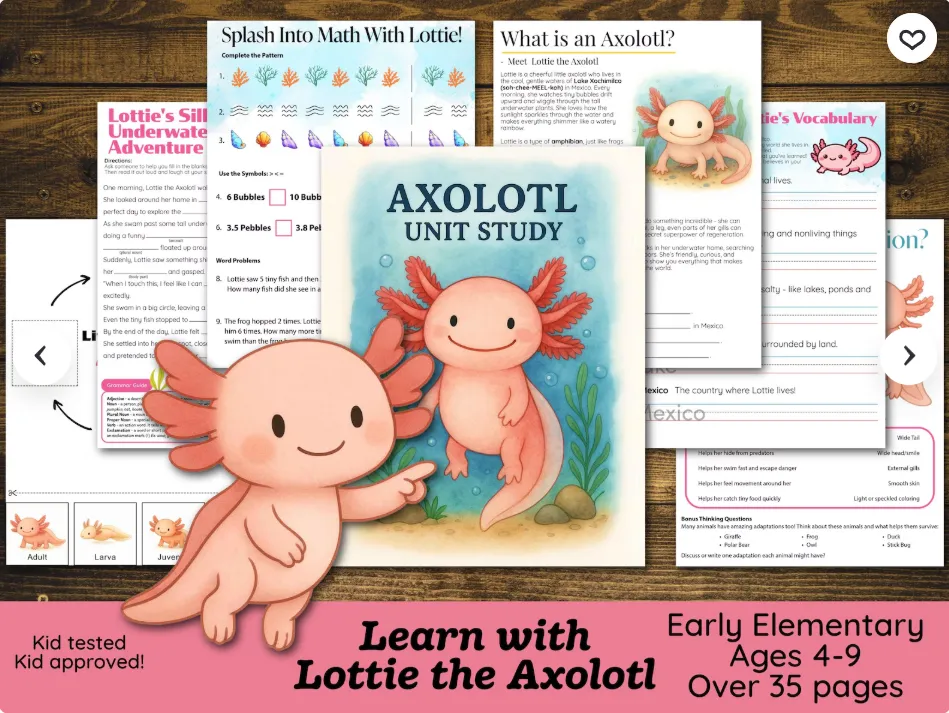
Theory is nice; here’s what it actually looks like. Say your six-year-old is deep in an axolotl phase. A whole week might go:
- Monday: Reading & vocabulary. Read a picture book about axolotls. Collect three new words on index cards: gills, habitat, regeneration.
- Tuesday: Science. Watch a two-minute clip of an axolotl. Talk about why it can regrow a limb, and which other animals can (and can’t).
- Wednesday: Math. Axolotls can lay hundreds of eggs. Count by tens to 100. For an older sibling, turn it into “if she lays 300 eggs and half hatch, how many babies?”
- Thursday: Art & writing. Draw an axolotl and label its parts. Write one sentence about your favorite fact. (A Stretch a Sentence printable is perfect here: it helps early writers turn “It is pink” into “The smiling pink axolotl waved its feathery gills.”)
- Friday: Show and share. Teach the family one cool axolotl fact at dinner. Tape the drawing to the fridge. Done.
Five short sessions, one happy kid, and reading, science, math, art, and writing all covered, because they all grew out of the same thread. That’s a unit study.
“But what about gaps?” and other worries
Two practical fears stop most parents from starting, so let’s name them.
“Won’t my kid have gaps?” Every approach leaves some, even the most rigid boxed curriculum. The short version: you can always add a focused skills program later, and a curious kid fills gaps fast. If that worry is the thing holding you back, it deserves a real answer. We wrote the honest, longer one in our guide to interest-led homeschooling.
“Do I need to keep records?” If your state asks for it, a unit study is easy to document: snap a photo of the finished work and jot the subjects you touched (“reading, science, math, art”). One topic genuinely covers a wide spread, which makes record-keeping easier, not harder.
The one mistake to avoid
Don’t try to make it complete. A unit study isn’t a curriculum. It’s a campfire. Your job is to light it and sit near it, not to make sure every subject gets exactly equal flames.
The parents who burn out are the ones who turn a joyful week about pumpkins into a high-pressure pumpkin syllabus with assessments. Resist. If your kid learned three new words and one cool fact and wanted to keep going, the week was a triumph. Underdo it on purpose, especially your first time.
Frequently asked questions
What subjects does a unit study cover? A good one touches most of them (reading, writing, math, science, history or geography, art, and character conversations), all anchored to a single theme. That’s the appeal: one topic, many subjects, no juggling.
How long should a unit study last? For ages 4–9, a week is a great default: one activity a day. Some topics earn two or three weeks if your child stays hooked; others are happily done in an afternoon. Let your kid’s interest set the length, not the calendar.
Do I need a curriculum to do unit studies? Not at all. You can build one from library books and a few activities. A done-for-you study just removes the planning: ours are story-first, print-and-go, and ready straight off the printer for the weeks you don’t have a spare evening.
What age are unit studies best for? They shine for ages 4–9, when kids learn best through play, story, and hands-on exploration. Older kids enjoy them too. They simply go deeper into the research and writing.
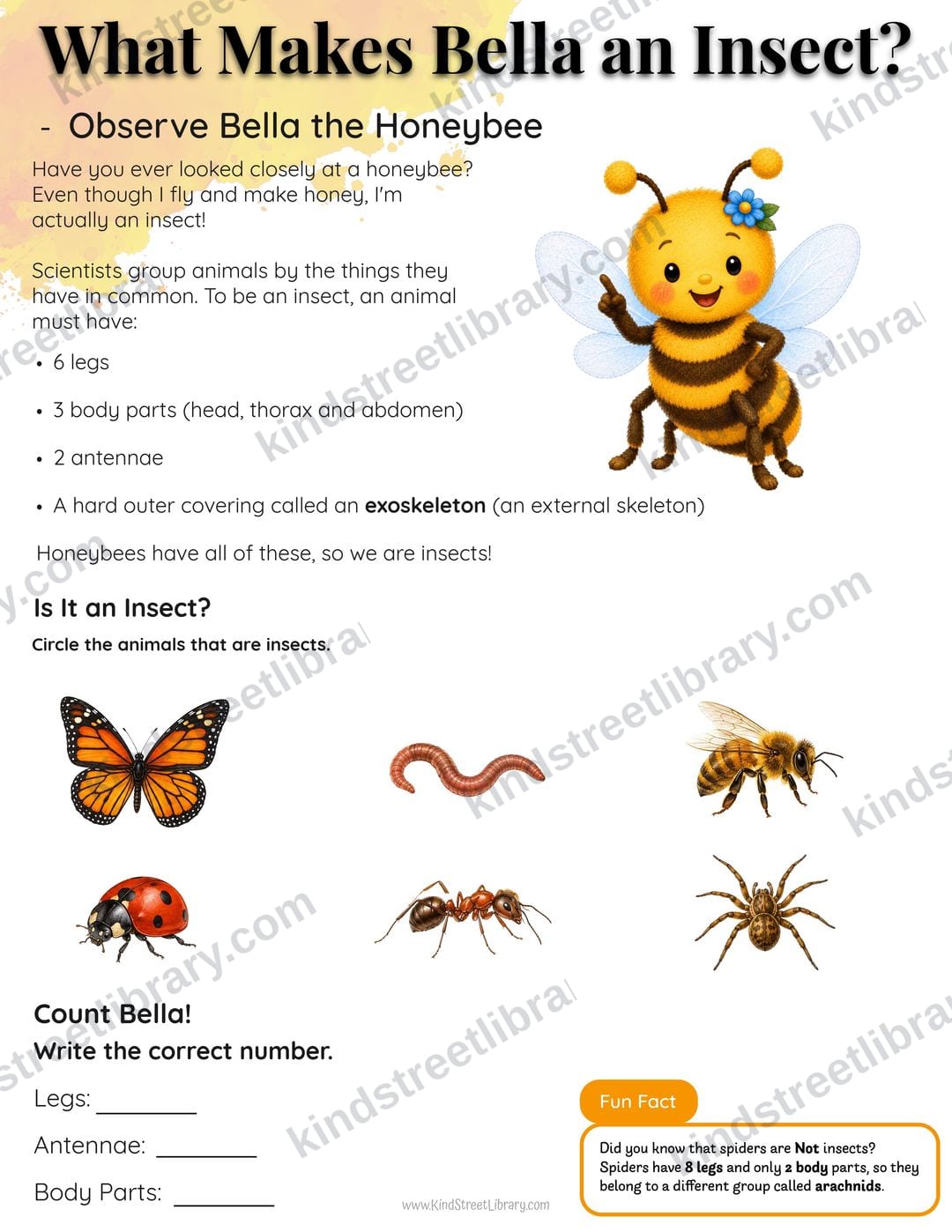
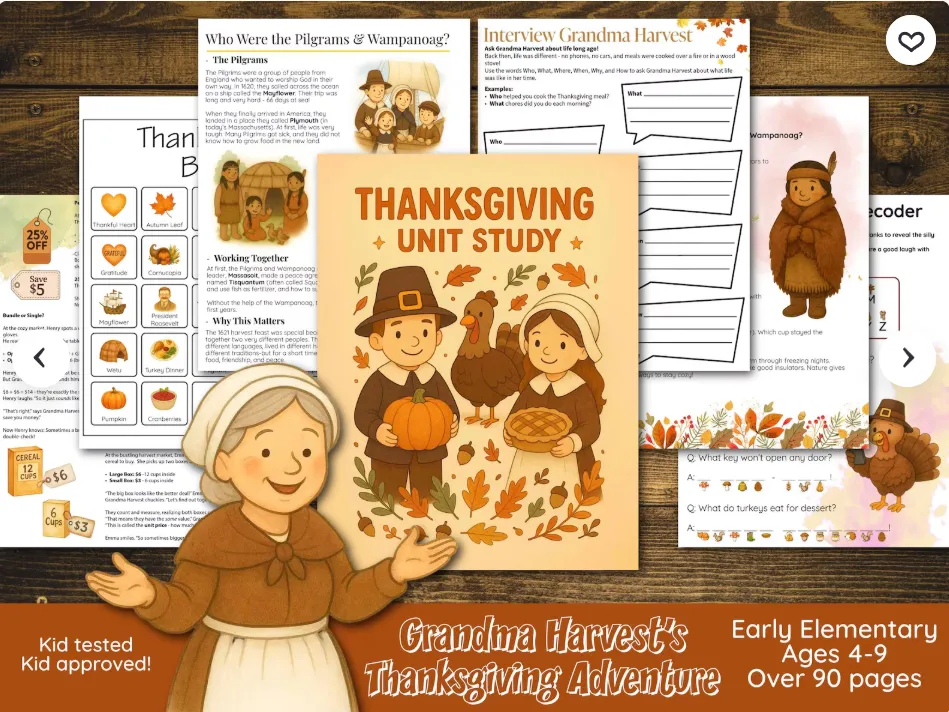
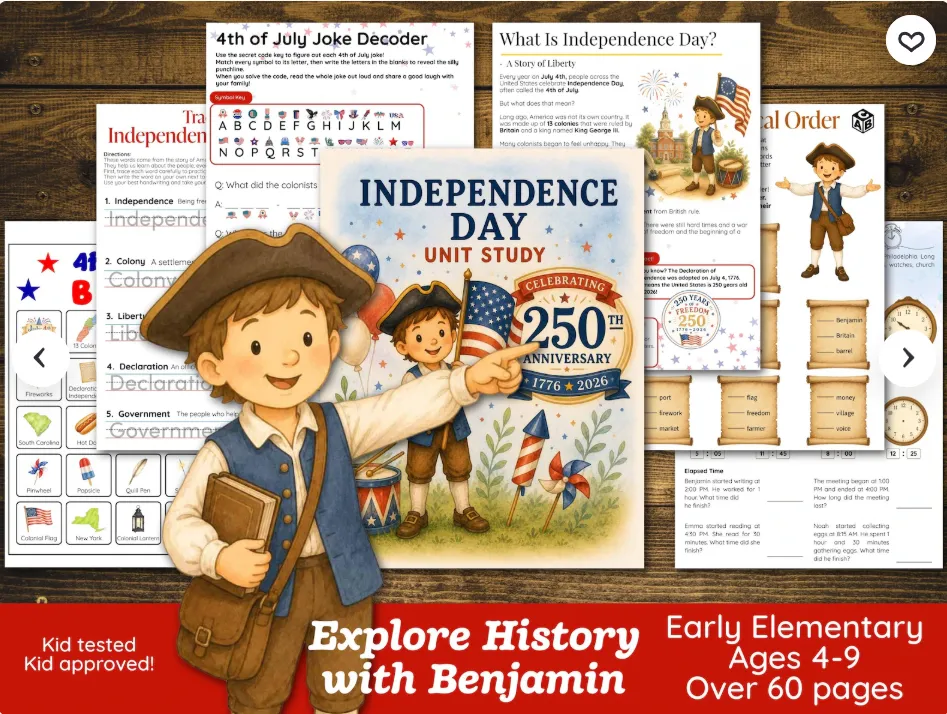
If you’d like a ready-made starting point, our unit studies are built exactly this way: story-first, print-and-go, and gentle on the parent running the show. The Thanksgiving and Independence Day studies are favorite first ones, and the new honeybee study with Bella is a perfect summer starter, and if you want the seasonal version of this guide, here are 7 hands-on 4th of July activities for kids to try this week.