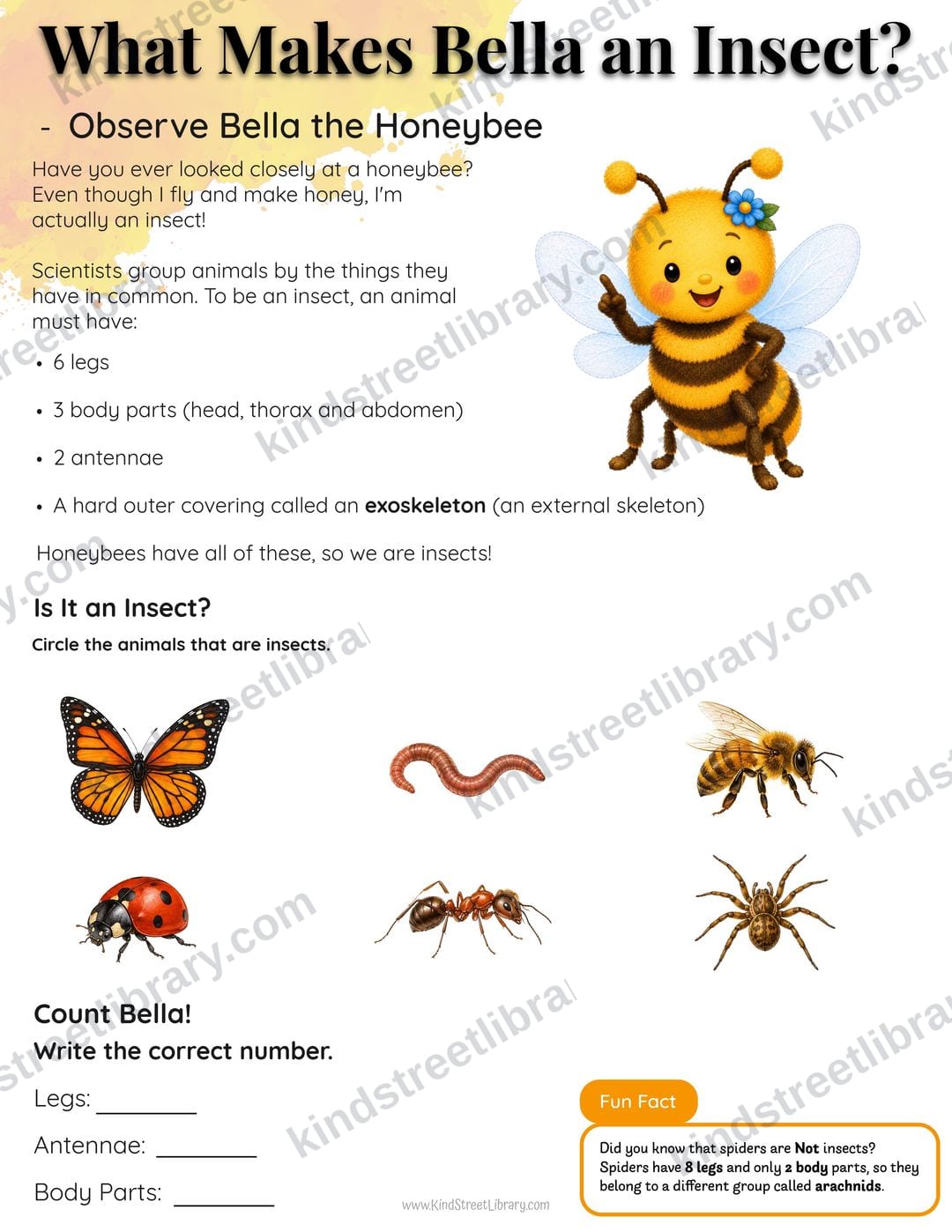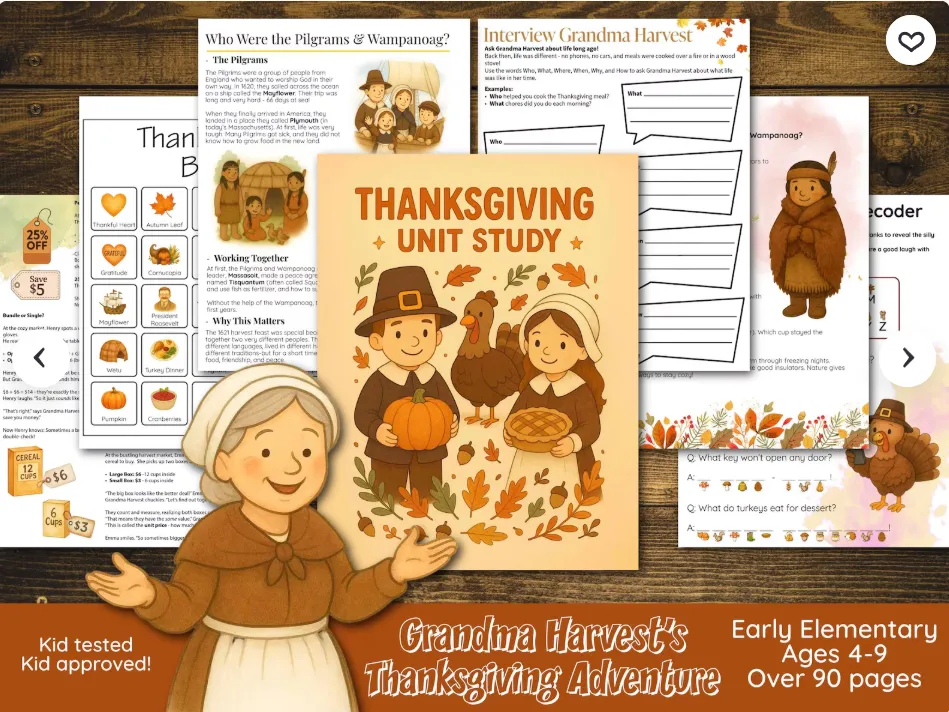
The single most exhausting way to homeschool more than one child is to run a separate school day for each of them. Different books, different lessons, different times: three plates spinning while someone yells “I’m done, what now?” from the other room. There’s a better way, and it’s the reason unit studies exist: teach one topic to everyone at once, and let each child meet it at their own level.
If you’ve got a 5-year-old and an 8-year-old (and maybe a toddler underfoot), this is the post for you. Here’s how to make one study work for very different ages at the same table, without dumbing it down for the big kid or overwhelming the little one.
Can you really teach multiple ages with one unit study?
Yes, and for ages 4–9 it’s usually easier than teaching them separately. The trick is to keep the topic shared and let the task flex. Everyone learns about, say, the first Thanksgiving together; then the five-year-old colors and counts while the eight-year-old reads the harder page and writes a few sentences. Same campfire, different-sized marshmallows.
This works because a good topic is naturally layered. “Thanksgiving” can be a counting activity or a persuasive-writing lesson. “Axolotls” can be a coloring page or a report on amphibian adaptations. You’re not running two lessons. You’re running one lesson with two on-ramps.
How to flex a single activity by age
Here’s the practical heart of it. Take any activity and ask, “how does this get simpler? how does this get harder?” A few real examples from the same study:
- Reading. Read the page aloud to everyone. The little one answers a point-and-say question; the big one reads it back independently and finds the main idea.
- Writing. The 5-year-old traces or copies one word. The 8-year-old writes two or three sentences of their own. (A Stretch a Sentence printable is great for the in-between kid who can write a little but freezes at a blank page.)
- Math. Same Thanksgiving word problem, two versions: “how many pies if each of 3 guests brings one?” for the younger, “…and each pie is cut into 6 slices, how many slices total?” for the older.

- Science. Do the hands-on experiment together. The younger child watches and describes what happened; the older child predicts first, then records results and explains why.
- Art & character. Everyone makes the craft or joins the conversation. These are the great equalizers: a four-year-old and a nine-year-old can both tell you what they’re grateful for.
The beauty is that the little one stretches up by listening to the big one, and the big one cements their learning by helping explain it. Mixed ages teach each other.
A sample shared morning
Here’s how a single Thanksgiving study might run for both kids at once:
- All together (15 min): Read the “true story of Thanksgiving” page aloud. Everyone listens; you ask one easy question and one harder one.
- Split tasks (20 min): Little one colors the scene and counts the place settings. Big one reads the follow-up page and writes two sentences about what surprised them.
- Back together (15 min): Do the gratitude tally chart as a family: counting practice for the younger, graphing and “what does the data show?” for the older.

One prep, one read-aloud, one table, and both kids got a real, level-appropriate morning of learning. That’s the multi-age magic.
What about the toddler?
Real talk: there’s often a two-year-old in the mix. Give them their own “big kid” version of whatever’s happening: a crayon and the same coloring page, a bowl of pom-poms to count, a board book on the topic. They mostly want to be included, not instructed. A busy box reserved only for school time works wonders, too.
Why unit studies are built for this
This is exactly why we make our unit studies the way we do. Each one is a single topic written for the whole 4–9 range, with pages that span easy to challenging, so you buy one study, not one per child, and teach it once. The Thanksgiving study is a favorite for mixed-age families because nearly every page flexes up or down.
If you’re new to the whole approach, start with how to start a unit study, and if you want the philosophy behind letting kids learn at their own depth, here’s our take on interest-led homeschooling. And because every Kind Street study is built around a character your kids will love, you might also like why stories teach character better than lectures.
Frequently asked questions
What’s the best age gap for teaching kids together? Anything within about four years works smoothly with one unit study. A 4-and-7 or 5-and-8 pairing is ideal. Wider gaps still share the topic and read-aloud; you’ll just split the independent tasks more.
Won’t the older child be bored or the younger one lost? Not if the task flexes. The older child goes deeper (more reading, more writing, “why” questions); the younger does the hands-on, point-and-say version. Shared topic, different output: nobody’s stuck doing the wrong-level work.
Do I need to buy a separate study for each child? No, that’s the whole point. One study covers the 4–9 range. Buy it once and run it for every kid at the table at the same time.
How do I keep a toddler busy during lessons? Give them a parallel version of the activity (their own crayon and page) plus a special “school time only” busy box. Inclusion beats instruction at that age.
Teaching multiple ages doesn’t have to mean multiplying your work. Pick one good topic, flex the task up and down, and let the table do what tables do best: bring different kids together around the same good thing.