Most homeschool parents hit the same realization sooner or later: the afternoon your child spends teaching themselves about something they chose (building it, asking about it, looking it up) produces more real learning than the lesson you carefully planned. Interest-led homeschooling is simply the decision to stop fighting that and start building on it.
If you’ve heard the term and wondered whether it means “let the kids do whatever they want and hope for the best,” this guide is for you. It doesn’t. Here’s what interest-led learning actually is, why it works beautifully for ages 4–9, and how to start without the fear that your child will end up with holes the size of craters.
What is interest-led homeschooling?
Interest-led homeschooling (sometimes called child-led learning) is an approach where your child’s genuine curiosity sets the direction, and you act as the guide who turns that curiosity into real reading, writing, math, and science. Instead of “today we cover page 42 because the schedule says so,” it’s “you can’t stop talking about sharks, so let’s learn everything about them, and pick up our skills along the way.”
The key word is guide. You’re not stepping back and disappearing. You’re stepping in to notice what lights your child up, then quietly weaving the academic skills through it. The interest is the engine; you’re still steering.
Why it works so well for ages 4–9

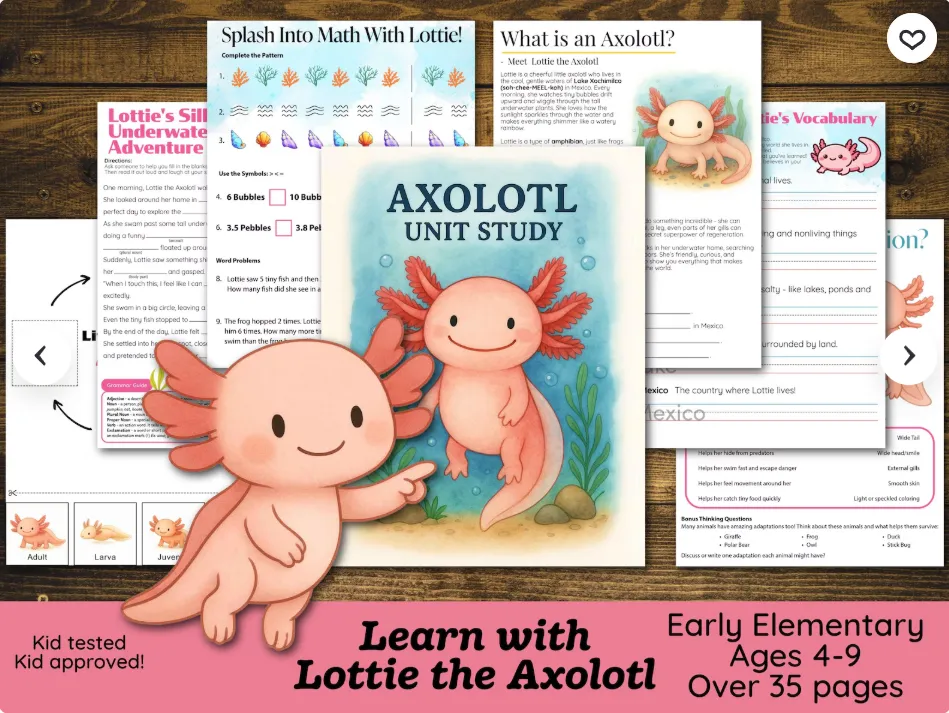
Young children learn through play, story, and hands-on exploration, not through sitting still and absorbing. When the topic is something they chose, three things happen at once: they pay attention longer, they remember more, and they ask better questions. A child who “hates reading” will happily decode bioluminescence because they need it to understand their beloved anglerfish. (It’s exactly why our Lottie the Axolotl unit study exists: an axolotl-obsessed kid will do a whole week of math, vocabulary, and geography without once noticing it’s school.)
There’s a quieter benefit too. Interest-led learning protects the thing that’s almost impossible to rebuild once it’s gone: the belief that learning is fun. A four-year-old who spends these years being told their curiosity is a distraction learns a sad lesson. A four-year-old whose questions are treated like treasure grows into a kid who teaches themselves.
What a normal interest-led day looks like
This is where it gets concrete. Say your six-year-old is deep in a space phase. A loose day might look like:
- Morning: Read a picture book about the planets together. Add two new words to a card stack: orbit, gravity.
- Midmorning: Build the solar system out of different-sized balls. That’s science (relative size), math (counting, ordering), and a craft, all at once.
- Afternoon: Draw a planet and write one sentence about it. Watch a short clip. Wonder out loud about something neither of you knows, and look it up together.
Notice there’s no subject called “language arts” on that schedule, yet reading, vocabulary, handwriting, and composition all happened. That’s interest-led learning working as designed: the skills ride in on the interest.
It also flexes for siblings. The same space day gives a four-year-old counting and coloring while an eight-year-old researches why Pluto got “demoted” and writes a paragraph defending it. Same topic, same table, different depths. Here’s how to run one study across two ages.
How to start (without overthinking it)
- Watch for the spark. For one week, just notice what your child returns to on their own. That’s your first topic. Don’t overrule it because it seems “unacademic.”
- Gather a small pile. A couple of library books, one craft, one experiment, a few printable pages. Small and finishable beats big and abandoned.
- Add the skills gently. Ask “what could we count here? what’s a new word? what could we write down?” Almost any interest has a math, reading, and writing door. Your job is to open one or two, not all of them.
- Follow the rabbit trails. The unplanned question (“but how do fish breathe underwater?”) is the best part, not a detour from the lesson. It is the lesson.
- Keep a light record. Snap a photo of the finished work and jot the subjects you touched. It’s reassuring to look back and see how much “just following his interest” actually covered.
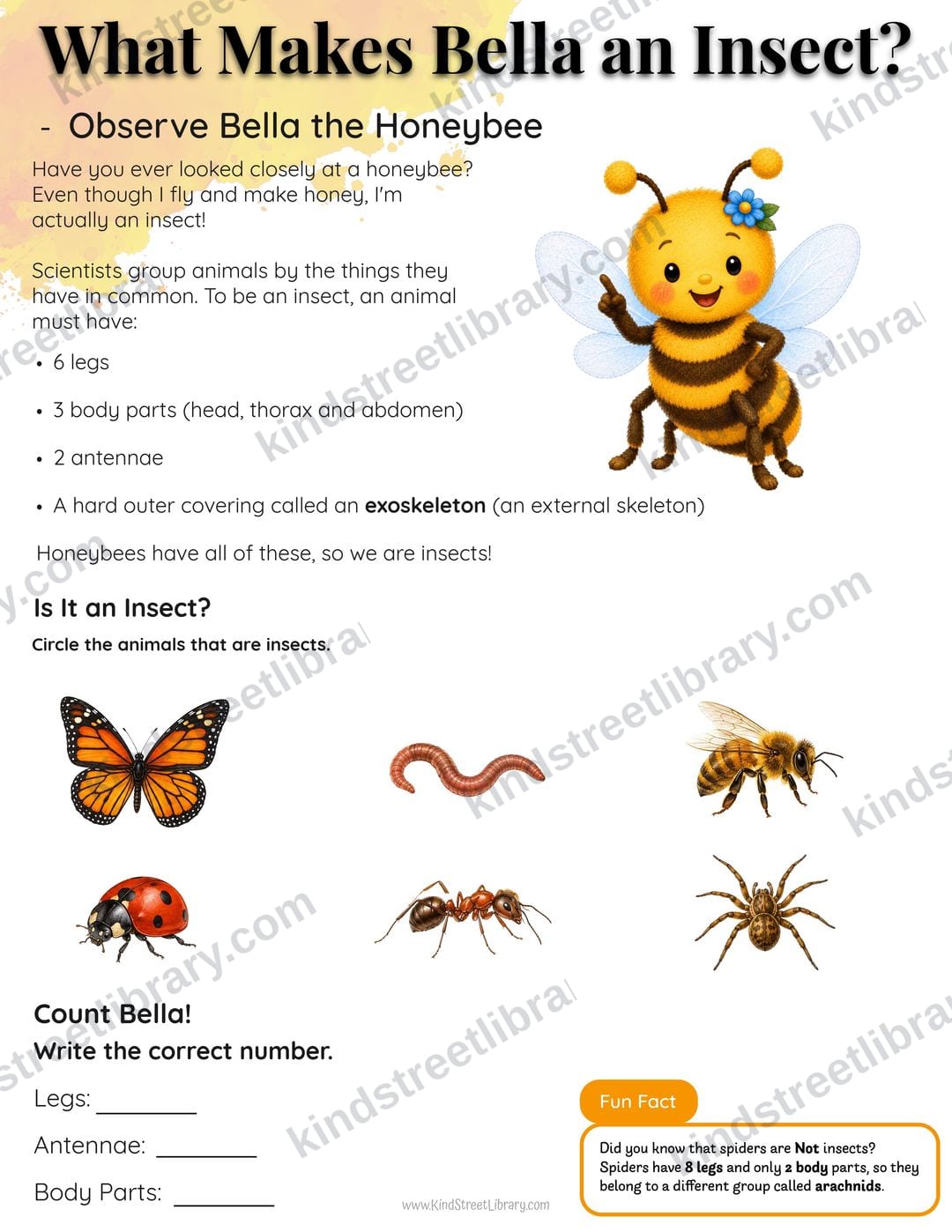
If that rhythm sounds familiar, it’s because a unit study is interest-led learning with the planning done for you: a single topic with the subjects already woven in.
“But won’t my child have gaps?”
This is the fear that stops most parents, so let’s be honest about it: yes, there will be gaps, and there are gaps in every approach, including the most rigorous boxed curriculum. No method covers everything. The real question isn’t “will there be gaps?” but “what is this approach building instead?”
Interest-led learning builds the one thing that actually predicts a lifelong learner: a child who knows how to get curious, dig in, and find out for themselves. Specific skill gaps are easy to fill later. You can add a math program in twenty minutes a day whenever you like. A love of learning, once stamped out, is far harder to rebuild.
For pure skills practice (handwriting, math facts, phonics), it’s completely fine to run a short, structured block alongside the interest-led work. Most families do exactly that: skills in the morning, curiosity the rest of the day.
Where unit studies fit in

Some weeks you have the energy to build a study from scratch around your child’s latest obsession. Other weeks you do not, and that’s exactly what done-for-you unit studies are for. Each of our unit studies takes one kid-friendly topic and grows every subject out of it: reading, math, science, history, art, and character conversations, all print-and-go for ages 4–9.
And the bigger character lessons (kindness, courage, honesty) work the same way. That’s the whole idea behind our storybook series: kids absorb character through story they want to read, not through lectures they tune out. Here’s why stories teach character better than lectures.
Frequently asked questions
Is interest-led homeschooling the same as unschooling? They’re related but not identical. Unschooling typically removes formal structure entirely. Interest-led homeschooling keeps you actively involved as a guide, using your child’s interests as the vehicle for intentional reading, writing, and math. Many families land somewhere in the middle.
How do I cover math and reading if we just follow interests? Two ways: weave the basics into the topic (count, compare, read about it, write about it), and, if you like, run a short daily skills block for math facts and phonics. The interest carries the meaning; the skills block builds the mechanics.
What ages is interest-led learning best for? It’s wonderful at every age, but especially powerful for 4–9, when kids learn through play and story and haven’t yet been taught that school is supposed to be boring.
How do I keep records for our state? Photograph finished work and keep a simple log of subjects covered. Because one interest naturally spans many subjects, you’ll often find a single project checks several boxes at once, which makes documentation easier, not harder.
The next time your child falls down a rabbit hole, try following them instead of redirecting them. You may find the best lesson of the week is the one you didn’t plan, and a new unit study waiting at the bottom of the hole.