You know the scene. A bee bumps against the window, or one lands on a flower during a walk, and the questions start. How do bees make honey? Why do they dance? Do they sleep? Can I keep one? By lunch you have answered what you can, guessed at the rest, and quietly wished you had something ready to hand your curious kid so all that interest went somewhere.
That gap is common, and it isn’t a sign you’re behind. A child asking the same kind of question all day is telling you exactly what they want to learn about right now. The trick is having a way to catch that interest before it drifts to the next thing.
While the questions are still fresh

Interest fades fast when there’s nothing to do with it. The good news is that a strong interest is the easiest place to build a week of learning, because the motivation is already there. You don’t have to talk your kid into caring about honeybees. They already do.
What helps is turning that question into a plan you don’t have to build from scratch. Instead of scrambling for a video here and a printout there, you point the curiosity at one path and let it run. That’s the difference between a busy afternoon and a week your child actually remembers.
A free way to start today
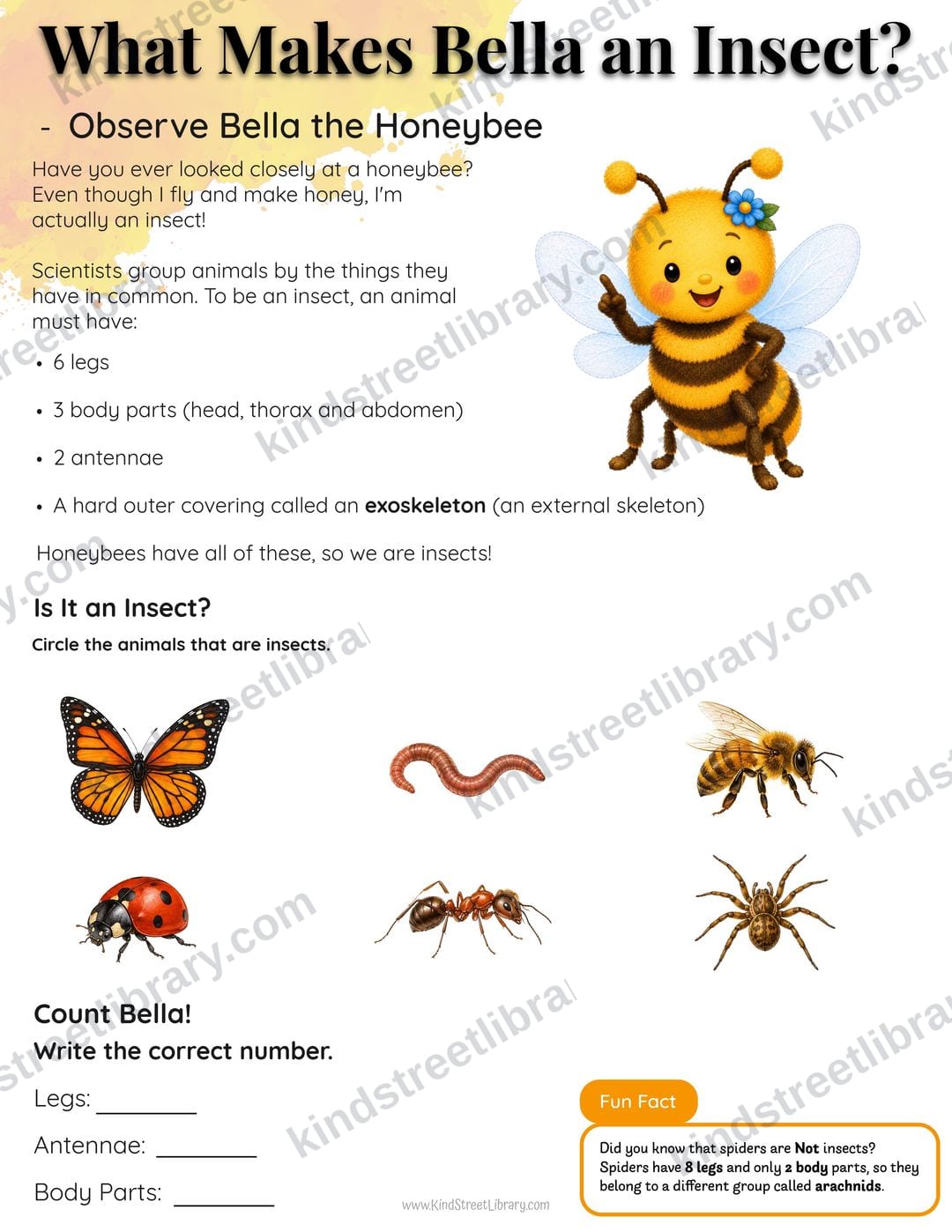
You can begin today without buying anything. Our free honeybee coloring pages star Bella the Honeybee and download in seconds, and each page carries a real bee fact, so the moment the questions start you have something to slide across the table. If you want more than coloring, our honeybee activities for kids post walks through seven hands-on ideas, including a backyard bee walk and a honey experiment you can run at the kitchen table.
Starting free also lets you see how your child responds before you decide whether you want more. If the honeybee topic holds their attention, and with a curious kid it usually does, you’ll have a natural sense of what to reach for next.
One honeybee study across the week

When the free start isn’t enough and you want the topic to carry a full week, Bee a Scientist with Bella is the paid unit study built for exactly that. It’s $10, and it’s designed so one subject stretches across science, reading, math, and art rather than staying in a single box.
That cross-subject fit is the point. Your child learns how honeybees actually live and work, reads and discovers along the way, uses real numbers, and makes something with their hands. It’s the same honeybee interest, followed all the way through a week, without you assembling five separate lessons yourself.
What a week like this gives you
A week built around one honeybee study does two things at once. Your child gets to chase something they genuinely wonder about, which is where real learning tends to stick. And you get a plan you didn’t have to piece together on a tired afternoon, so the questions have somewhere to go.
So the next time a bee shows up at the window and the questions start, you’ll have an answer ready. Print the free coloring pages to start today, and if you want the whole week mapped out, Bee a Scientist with Bella is there when you’re ready.