Every parent has delivered The Kindness Lecture. Eye contact, serious voice, “how would you feel if…” And every parent has watched it bounce straight off a seven-year-old like rain off a tent.
Then the same child sobs at the end of Charlotte’s Web and spends a week being gentle with spiders.
That’s not a coincidence. That’s how children are built, and once you understand why, you’ll reach for a story far more often than a speech.
Lectures talk at the brain. Stories happen inside it.
When a child hears a lecture, they’re being judged, so their energy goes into defending, deflecting, or waiting for it to end. When a child hears a story, nobody is accusing them of anything. They’re free to step into a character’s shoes and feel the whole thing from the inside: the temptation, the bad choice, the consequence, the repair.
A lecture says you should be honest. A story lets a child be the kid who lied, feel the knot in the stomach, and walk through making it right, all in the safety of someone else’s name.
What’s actually happening in your child’s brain
This isn’t just a nice metaphor. Psychologists who study reading have a name for what happens when a child gets lost in a story: narrative transportation. When we’re “transported” into a story, the brain processes the characters’ experiences much like our own, which is why a sad ending makes you cry over people who never existed. For a child, that means a character’s choice isn’t an abstract rule; it’s something they lived through for a few pages.
Stories also exercise what researchers call theory of mind: the ability to imagine what someone else is thinking and feeling. Following a character who knows something another character doesn’t, or who’s hiding a secret, is a workout for exactly the muscle empathy depends on. A lecture asks a child to agree that other people have feelings. A story lets them practice tracking those feelings, page after page.
The upshot: when you read your child a great story, you’re not killing time before the “real” lesson. The story is the lesson, and it’s reaching a deeper part of them than any talk could.
The practice that makes stories stick
The magic isn’t only in the story. It’s in the small pause afterward.
We call it pause and ponder: when something big happens in a story, you simply stop and wonder about it together, with no right answer required.
- “Whoa. Why do you think he did that?”
- “What would you have done?”
- “Do you think she’ll forgive him? Should she?”
Two minutes, tops. No moral-of-the-story summary at the end: children can smell a lecture hiding inside a story from a mile away. You’re not extracting the lesson; you’re wondering together. The wondering is the lesson.
One caution: don’t pause on every page. If you interrupt the story constantly, you break the very transportation that makes it work. Let the story carry them, and save your pause for the one or two moments that genuinely matter: the choice, the mistake, the repair.
Pause and ponder at different ages
- Ages 4–5: Keep it about feelings you can point to. “He looks sad… why do you think?” Naming emotions in a character is the first rung of empathy.
- Ages 6–9: Now you can wonder about choices and fairness. “Was that fair? What could she have done instead?” This age loves to argue the ethics of a story, and that argument is character work in disguise.
What to look for in character-building books
- Characters who get it wrong. Perfect characters teach nothing. Kids need heroes who blow it and repair it.
- Consequences with warmth. The story should take the mistake seriously without humiliating the character.
- Room to wonder. The best books leave a little space where a family conversation fits perfectly.
A few read-alouds that do this beautifully, if you want somewhere to start: Charlotte’s Web (loyalty and loss), The Rabbit Listened by Cori Doerrfeld (how to be present for a hurting friend), Last Stop on Market Street by Matt de la Peña (gratitude and seeing beauty in everyday people), and Each Kindness by Jacqueline Woodson (which, unusually and powerfully, does not tie up the mistake with a bow). Read any of them slowly, pause once, and watch what happens.
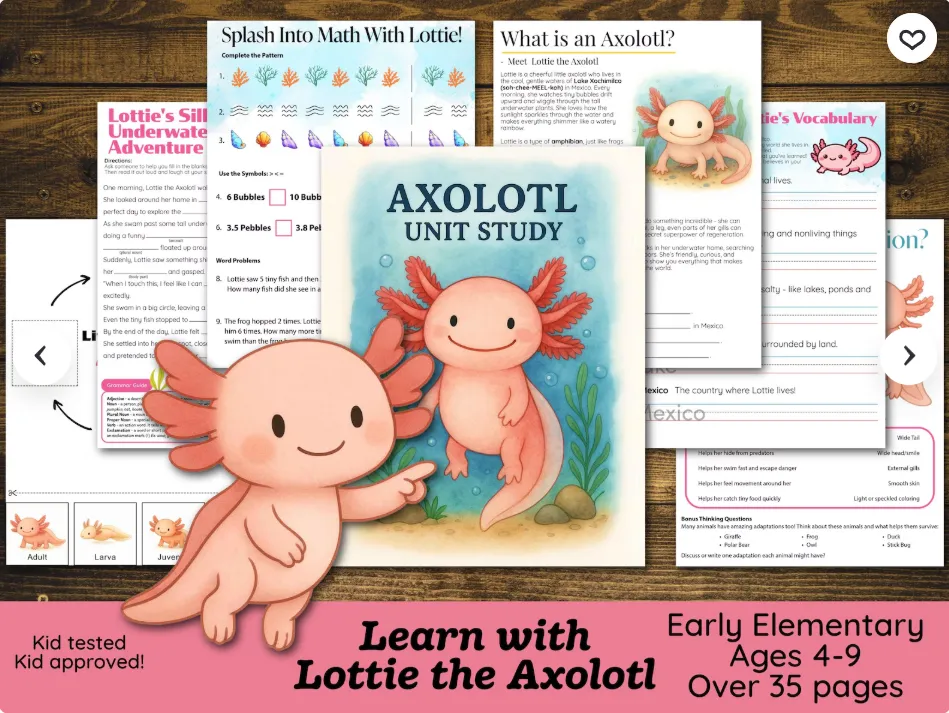
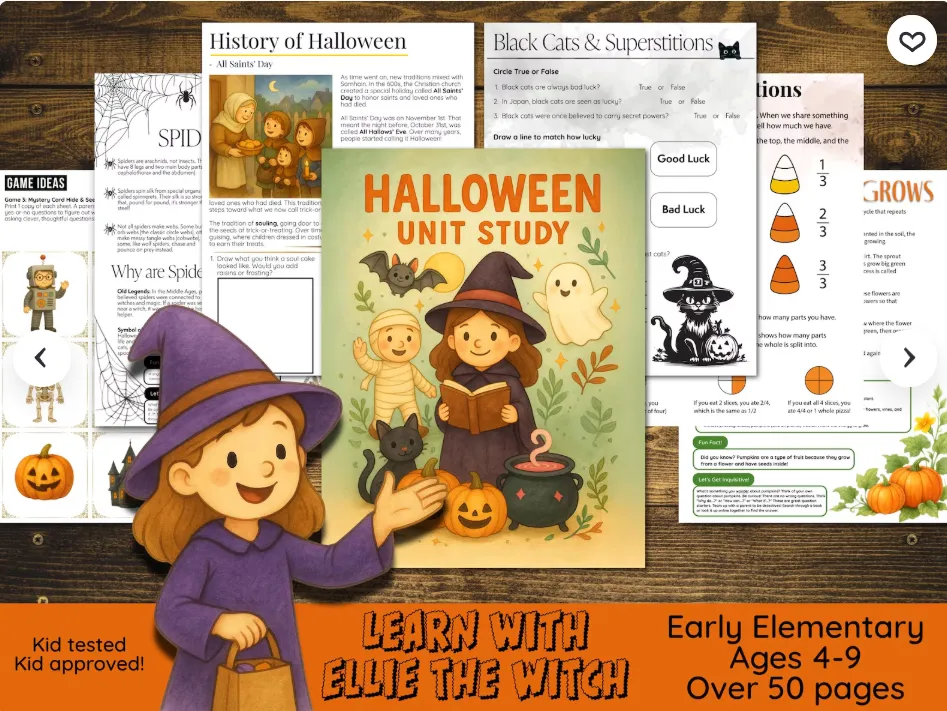
It’s the same principle behind our own unit studies: a character leads and the learning follows. Ellie the Witch walks kids through a not-too-spooky week of Halloween science and math, and Lottie the Axolotl turns amphibian biology into story time, because a lesson a child takes from a beloved character simply sticks.
Where stories and conversation meet
Reading is the input; talking is where it takes root. After a great story, the kindness conversation starters are a natural next step. Many of them are really just “pause and ponder” aimed at real life instead of the page.
And this is exactly the kind of story we’re building at Kind Street Library: a series of storybooks about eight kids on one street, each learning the slow, real way: by getting it wrong, being loved anyway, and trying again. Our unit studies work the same way, tucking a character story inside every topic.
Frequently asked questions
How do you teach character to young children? Through stories far more than lectures. Read books where characters make mistakes and repair them, then pause briefly to wonder about the choices together, without summarizing a moral. Children absorb character by living it through a character.
Why are stories better than lectures for teaching values? Lectures put kids on the defensive; stories let them experience a choice from the inside through narrative transportation, and practice imagining others’ feelings (theory of mind). The lesson reaches them emotionally instead of bouncing off.
What makes a good character-building book for kids? A flawed-but-loved main character, consequences handled with warmth rather than shame, and a little room left for the reader to wonder, so a family conversation fits naturally.
What is the “pause and ponder” method? Stopping briefly at a key moment in a read-aloud to wonder out loud together (“why do you think she did that?”), with no right answer and no tidy moral. It turns reading into reflection.
Until our series is in your hands: read together, pause often, and ponder out loud. It counts more than any lecture you’ll ever give.